
Construction MSDs Start Long Before an Incident Report. ErgoEdge Finds the Risk First.
Heavy lifting, overhead installation, repetitive masonry, and confined space work make construction one of the highest MSD-risk industries. ErgoEdge assesses ergonomic risk from video recorded on a smartphone -- scoring NIOSH, RULA, REBA, and ART for every high-risk task on site. No wearables. No specialist ergonomist required on location.
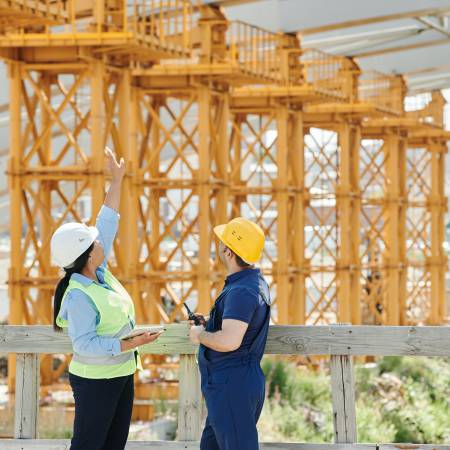
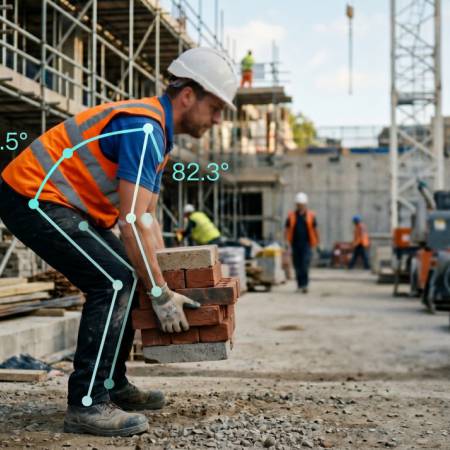
How ErgoEdge Works in Construction
ErgoEdge assesses ergonomic risk on construction sites from video recorded on a standard smartphone or tablet. The AI scores NIOSH Lifting Equation for heavy material handling, RULA for overhead installation work, ART for repetitive masonry and plastering, and REBA for confined space and groundwork postures -- without wearables, specialist ergonomists, or production disruption.
Top Ergonomic Risks in Construction
Understanding the highest-risk tasks is the first step to prevention. These are the primary musculoskeletal disorder (MSD) drivers ErgoEdge addresses in Construction environments.
Heavy Material Lifting and Carrying
Carrying bricks, blocks, bags of cement, steel reinforcement, and timber generates high spinal load. ErgoEdge NIOSH scoring identifies which tasks and workers are most exposed.
Overhead Installation Work
Bricklaying, plastering, and tiling involve thousands of repetitive upper limb movements per shift. Use ErgoEdge to score cumulative upper limb MSD exposure at these tasks, identifying the combination of frequency, force, and posture that drives risk.
Awkward Postures in Groundwork and Confined Spaces
Excavation, pipe-laying, cable ducting, and work in crawl spaces require sustained squatting, kneeling, and forward trunk flexion. ErgoEdge quantifies whole-body posture risk in these conditions
Manual Digging and Compaction Work
Shovelling, raking, tamping, and operating hand-guided compaction equipment combine high force, repetition, and awkward posture. From smartphone video identifies the highest-risk groundwork tasks across a site before cumulative exposure causes injury
How ErgoEdge Addresses Construction Ergonomic Risks
ErgoEdge gives construction EHS teams the ability to assess ergonomic risk across every high-risk task on site -- lifting, overhead work, masonry, groundwork, and confined space operations -- using video recorded on a standard smartphone or tablet. No specialist ergonomist required on location. No wearables on workers.
- ErgoEdge gives construction EHS teams the ability to assess ergonomic risk across every high-risk task on site -- lifting, overhead work, masonry, groundwork, and confined space operations -- using video recorded on a standard smartphone or tablet. No specialist ergonomist required on location. No wearables on workers.
- RULA assessment for overhead installation tasks -- ceiling fixtures, pipework, electrical conduit, and structural components
- ART (Assessment of Repetitive Tasks) for high-frequency masonry, plastering, tiling, and groundwork operations
- REBA whole-body posture scoring for excavation, pipe-laying, confined space, and kneeling or squatting tasks
- Site-level risk dashboards showing MSD exposure by task, trade, and location across the construction project
- PDF and Excel reports for CDM compliance, ISO 45001 documentation, and manual handling risk assessment records
Why Construction Workers Face High MSD Risk
Construction consistently records some of the highest rates of musculoskeletal disorder injuries across all industry sectors. The physical demands are extreme and varied: workers lift and carry heavy materials across uneven ground, work overhead for sustained periods during installation tasks, repeat the same motions hundreds of times during bricklaying and plastering, and adopt highly compromised postures in confined spaces and excavation work. Unlike a controlled factory environment, these tasks happen in changing outdoor conditions across sites that are redesigned every few weeks.
What makes construction ergonomics particularly challenging is that the same job title covers a wide range of physical exposure. A groundworker on one site may spend most of a shift shovelling; on another, they are operating a hand-guided compactor. A carpenter may spend one day lifting and carrying timber, the next working overhead installing roof structures. This variability makes blanket risk assessment approaches inadequate -- individual task assessment is required, and it needs to be practical enough to happen on an active site without specialist ergonomist attendance.
How ErgoEdge Works on Construction Sites
ErgoEdge makes systematic ergonomic risk assessment practical in the construction environment. A site supervisor or EHS manager records a short video of a worker performing a specific task on a standard smartphone or tablet -- no specialist equipment, no wearables on the worker. The video is uploaded to ErgoEdge via the mobile or web app. Within minutes, the platform scores the task using the appropriate international standard: NIOSH Lifting Equation for heavy material handling, RULA for overhead and upper limb work, ART for repetitive trades tasks, and REBA for whole-body posture in groundwork and confined space operations.
ErgoEdge is designed to work accurately in outdoor and variable-lighting conditions, with workers wearing PPE, high-visibility workwear, and helmets. The platform identifies and tracks the worker throughout the video and delivers consistent risk scores regardless of the environmental conditions on site.
Building a Risk Evidence Base Across the Project Lifecycle
The ErgoEdge management dashboard aggregates assessment data by task, trade, and location across the construction project. Site managers and EHS leads can see which tasks carry the highest cumulative MSD risk, track how risk changes as methods or workstation configurations are modified, and identify which trades or subcontractors have the highest exposure. This cross-site visibility supports both operational intervention and the safety management reporting required under CDM regulations and ISO 45001 frameworks.
Assessment reports export to PDF and Excel for direct inclusion in manual handling risk assessment records, pre-construction health and safety plans, and client-facing compliance documentation. For principal contractors managing complex projects with multiple subcontractors, ErgoEdge provides a scalable way to evidence systematic ergonomic risk management across the full project workforce without requiring a specialist ergonomist on site at all times.
Related Case Studies
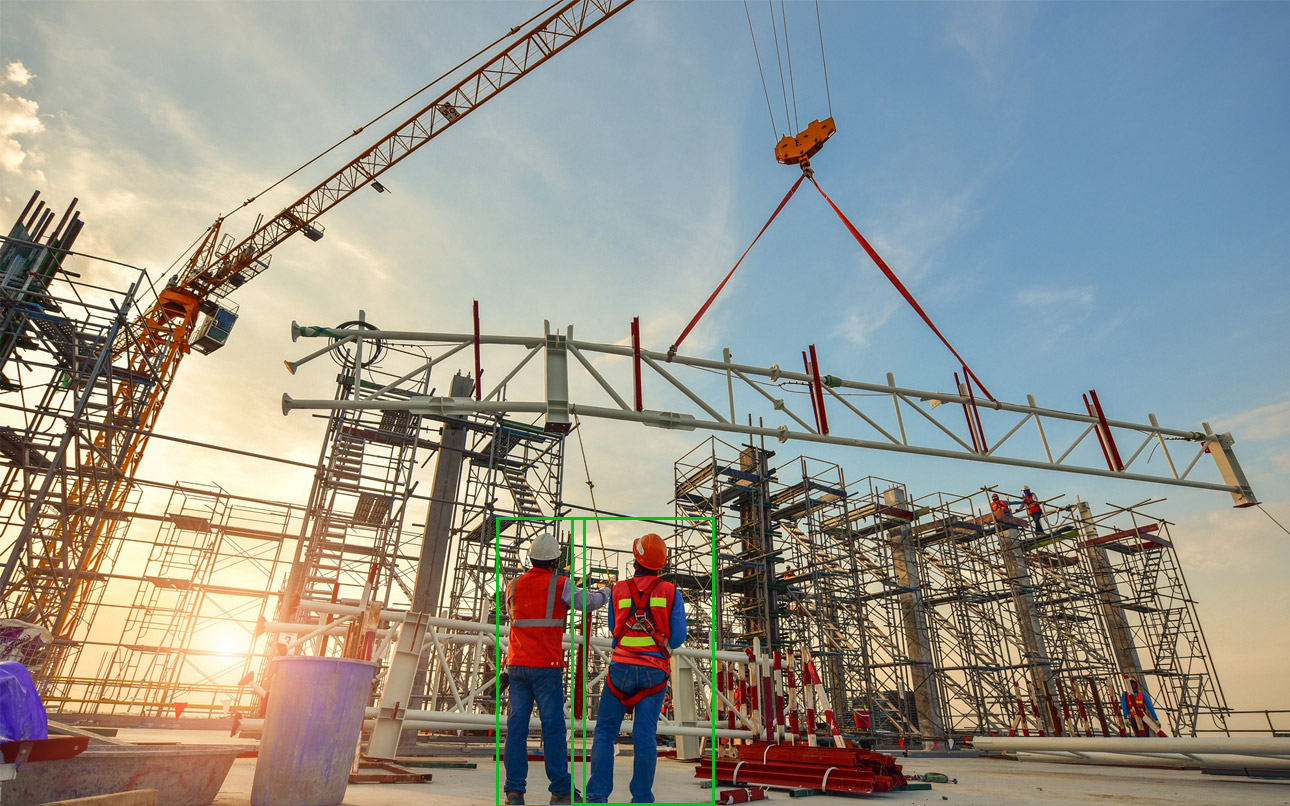
Unveiling Real-World Insights: Exploring AI Vision Through Concrete Case Studies
Frequently Asked Questions
How does ErgoEdge assess ergonomic risk on a construction site?
A site supervisor or EHS manager records a short video of a worker performing a high-risk task, lifting materials, working overhead, or laying bricks, using a standard smartphone or tablet. The video is uploaded and ErgoEdge scores the task automatically.
Which assessment methods does ErgoEdge use for construction tasks?
ErgoEdge provides a range of standard and open ergonomics standards for any kind of tasks. All methods are internationally recognised occupational health standards accepted by HSE, ISO 45001, and industry regulators.
How does ErgoEdge support construction health and safety compliance?
ErgoEdge generates assessment reports (PDF/Excel). A documented evidence of systematic ergonomic risk assessment -- a requirement under the UK Construction Design and Management (CDM) Regulations, ISO 45001, and manual handling risk assessment obligations.
Certified Platform


ISO 27001:2022 · NVIDIA Cloud Validated · IAS Accredited